
Most of the cricket our players play is white-ball: 20 or 30 overs, coloured clothing, a result in a few hours. Red-ball cricket runs alongside it at SPSA, with Test matches through the season, usually at weekends. This mid-term break, we went further: two two-day Tests between SPSA squads, back to back over four days.
Before his 100th Test, Virat Kohli said of the format: “this for me is real cricket.” These matches weren’t about results, as every player on the field was from SPSA. They were about playing the game the way it’s played at the highest level, and what our cricketers learn about themselves along the way.
Why the longer format matters
Short formats reward boundaries and quick wickets. The longer game tests what lies underneath: technique, temperament and the ability to stay in the contest for hours, not overs.
- Batters learn to build an innings: leaving well, rotating the strike and batting through a session.
- Bowlers learn to set up a batter, with long spells to work on a line and test a weakness.
- Fielders learn to stay switched on for a full day.
- The red ball behaves differently. It swings and seams more and bounces more truly, which sharpens technique.
UAE head coach Lalchand Rajput made the same point when the national squad played a two-day tournament in 2025: “The key is for batsmen to learn how to play long innings, which is crucial, while bowlers will learn to bowl long spells.” He called it a test of stamina, endurance and, above all, mental strength. It’s also the pathway. Selectors at every level watch how young players handle multi-day cricket, because it shows how sound their game really is. India runs a multi-day competition for its Under-16s, and England’s Under-18 county championship includes a two-day competition, the same length as the matches our players have just played.
Making the most of the break
During term, our Tests have to fit into weekends alongside league fixtures. The break gave us four free days in a row. Between 12 and 15 October we played at MCC2 Ajman. The first match started at 7:30am to beat the heat, and the second ran from 4pm each day under lights. Test cricket under lights has history here: Dubai hosted Pakistan’s first day-night Test in 2016, played with a pink ball, and Azhar Ali made 302 not out.
The two matches
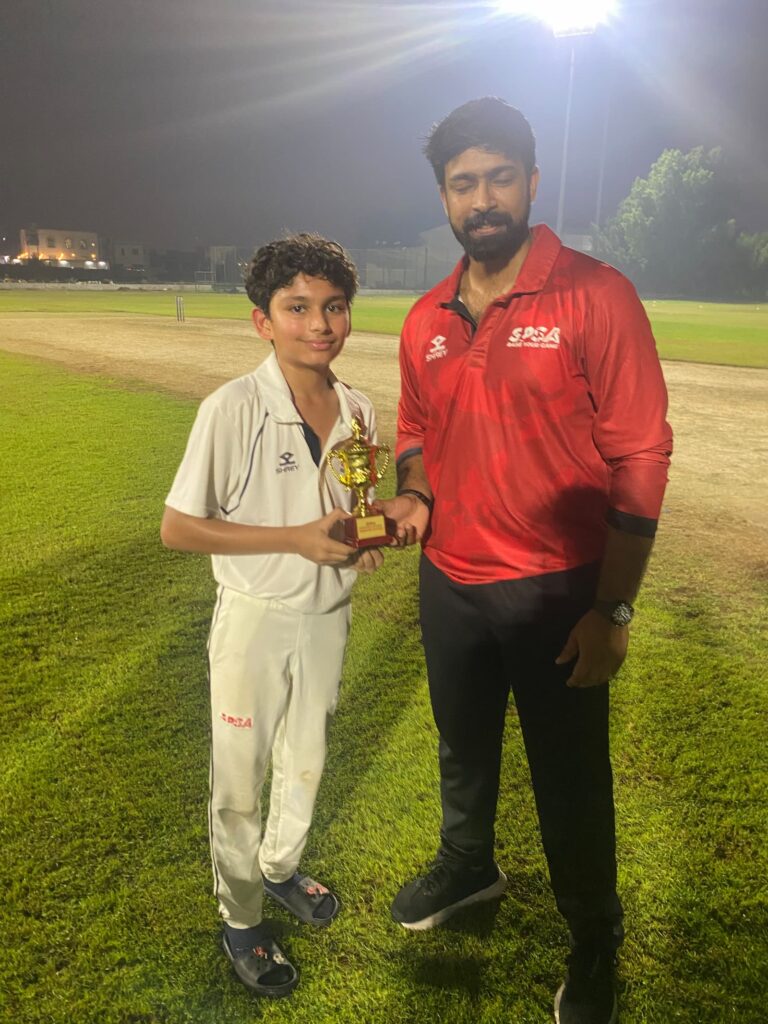
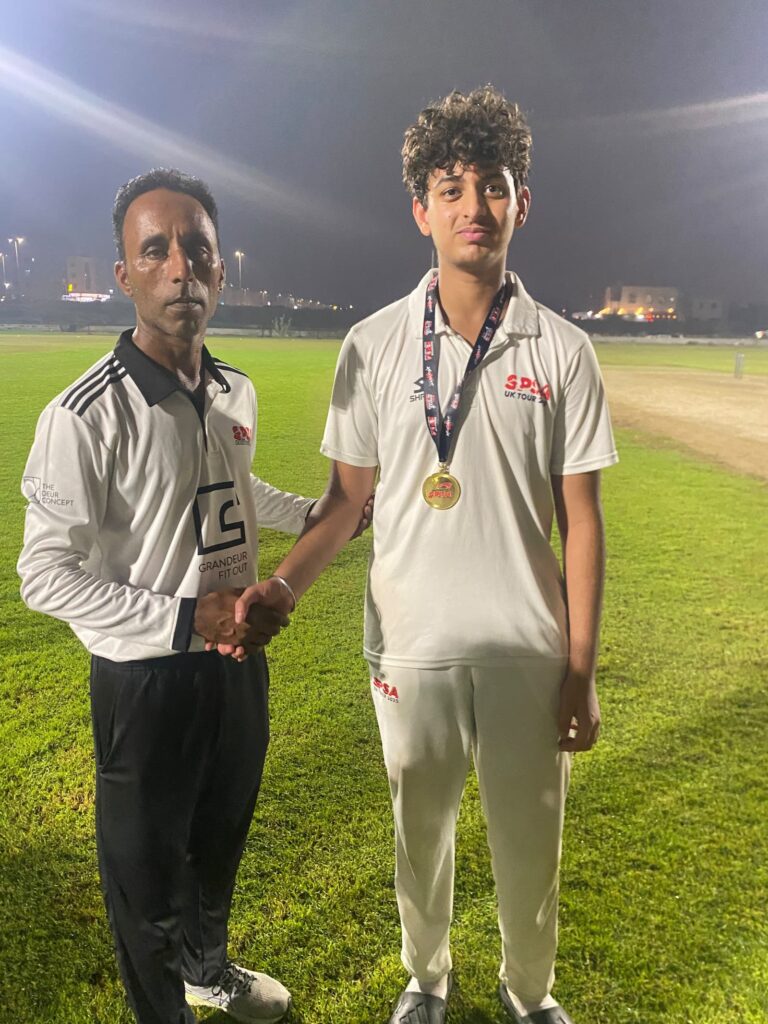
SPSA Strikers vs SPSA Panthers, 12–13 October: The Panthers chose to bowl, and Dali Garrett’s 4 for 10 earned Player of the Match. The Strikers made 128/9, with Tanav Jain (32 off 70) and Vihaan Mahesh (30 off 55) doing the hard work. Rajveer Anand (3/20 from 10 overs) and Zack Crasta (3/14) kept the Panthers under pressure, but their openers Arjun Nagathan and Ahan Moghe saw out the last 10 overs of day one without losing a wicket. Rohinth Jeyaraj added 18 late on as the Panthers batted almost 60 overs for 120/9. The match was drawn, with the Strikers ahead on first innings by 8 runs.

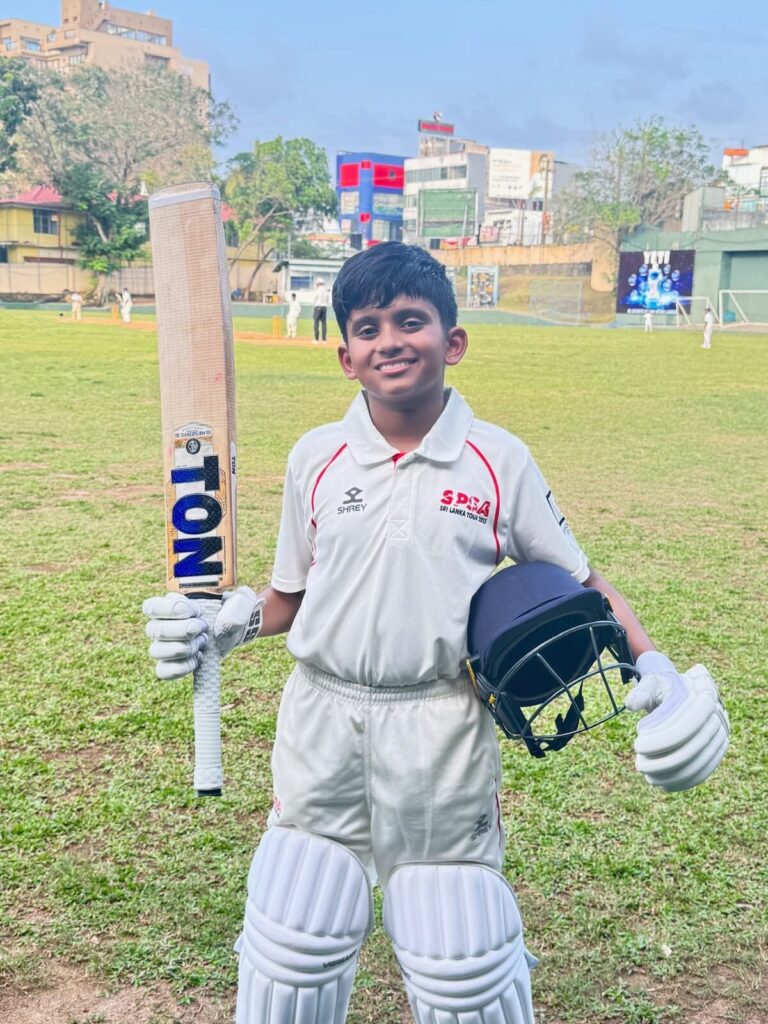
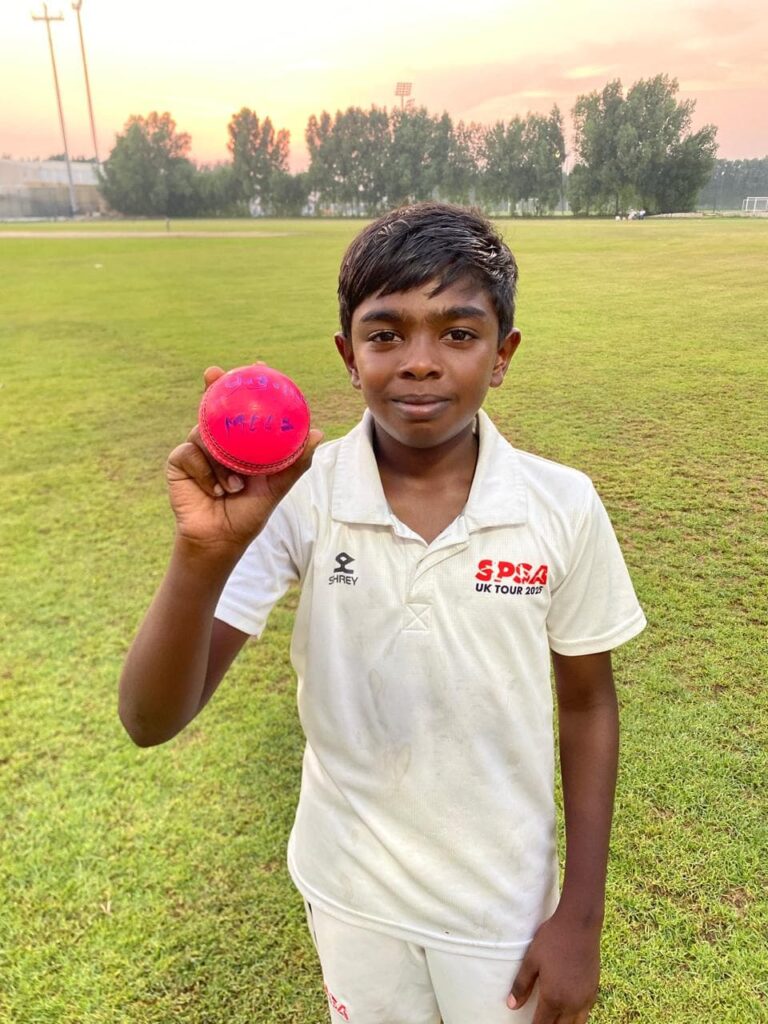
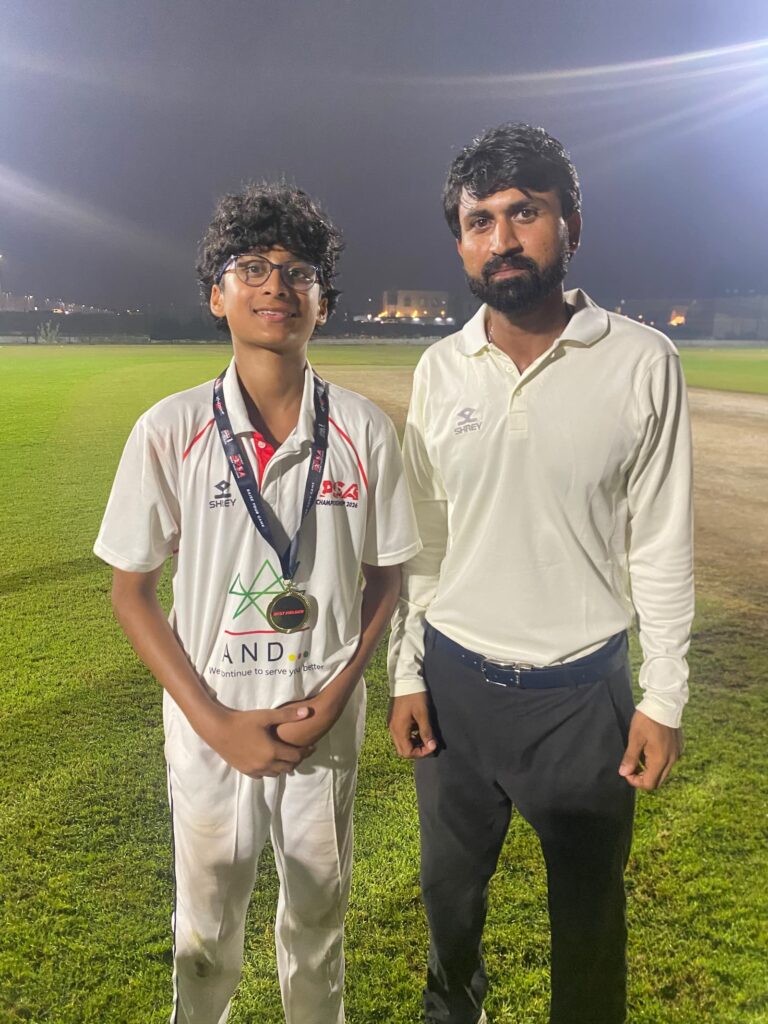
SPSA A vs SPSA B, 14–15 October: SPSA A batted first and made 175/7, built on a 50 partnership between Shaarav Puranik (43 off 55) and Saatvik Puranik (45 off 82). The game turned on Player of the Match, Rohinth Jeyaraj’s spell of 9 overs, 3 maidens, 5 wickets for 11 runs, and SPSA B closed day one on 73/5. Vyan Puthran (45 off 89) and Ishaan Sayal (20 off 51) steadied the innings on day two, taking SPSA B to 147/9. SPSA A declared their second innings at 131/6, setting a target and leaving time to bowl. SPSA B were 17/3 at stumps. The match was drawn, with SPSA A ahead on first innings.
What we learned
1. Patience scores runs. Our best innings, from Saatvik, Vyan and Tanav, came at strike rates that would look slow in a T20, but in a Test those innings held their sides together. In Kolkata in 2001, India followed on 274 runs behind Australia. VVS Laxman and Rahul Dravid batted through the whole fourth day, and India won by 171 runs. Laxman’s secret was simple: “one ball, one over, one hour.”
2. Line and length wins over a long spell. Rohinth’s spell looks a lot like one from the most famous leg-spinner of all. At the Gabba in 1995, Shane Warne took 7 for 23 against Pakistan, bowling 9 maidens in 16.1 overs. Like Rohinth’s 5 for 11, it cost barely more than a run an over. Warne is remembered for the “Ball of the Century”, but spells like this were built on the same question asked again and again until the batter got it wrong.
3. Extras cost more in the longer game. In both matches, extras made up around a third of an innings’ runs: 31 of the Panthers’ first 100, and 39 of SPSA B’s first 101. The highest share ever recorded in a Test innings is 18.7%. Controlling the swinging red ball is a skill our bowlers are still learning.
4. Every run counts. Both matches were decided on first-innings lead, by 8 and 28 runs. In nearly 150 years, only two Tests have been won by a single run: West Indies against Australia, Adelaide 1993 and New Zealand against England, Wellington 2023. A few more runs from the tail, or a few fewer wides, would have changed our results too.
5. Concentration has to last until stumps. SPSA B lost 3 wickets in their last 4 overs, and the Strikers 3 in their final 10. The last overs of a day are among the hardest to bat in Test cricket. At the MCG in 2021, England lost four late wickets to be 31/4 at stumps on day two, then were all out for 68 the next morning. It can go the other way too: Australia’s Jason Gillespie went in as nightwatchman against Bangladesh in 2006 and made 201 not out.
6. Think about the whole match. SPSA A’s declaration was a lesson in when to stop batting and give your bowlers time to win. Even the greats can get it wrong: in 1968, West Indies captain Garry Sobers declared to set England a target, and England chased it down to win the series.
What’s next
White-ball cricket is at the heart of the season, with the ECB Academy League every weekend, and red-ball Tests will keep running alongside it. Talking this year about 15-year-old T20 star Vaibhav Sooryavanshi, Rahul Dravid said young players need red-ball cricket too: “I think you always have to find that balance.” The lessons from these two games will shape what our players work on in nets before the next one.
Interested in joining SPSA’s cricket programme? Get in touch to book a trial session.
Sources
- Virat Kohli on Test cricket before his 100th Test: Oman Observer (AFP), March 2022
- Lalchand Rajput on the UAE two-day tournament: Gulf News, 8 February 2025
- India’s Under-16 multi-day competition (Vijay Merchant Trophy): BCCI domestic tournaments
- England’s Under-18 two-day county competition: ECB regulations
- Pakistan’s first day-night Test in Dubai, 2016, and Azhar Ali’s 302 not out: Eurosport; The News on Sunday
- Laxman and Dravid at Kolkata, 2001: Wisden
- Shane Warne’s 7 for 23 at Brisbane, 1995: ESPNcricinfo scorecard; Cricinfo archive scorecard
- Highest share of extras in a Test innings (18.7%): ESPNcricinfo, Ask Steven
- The first Test, Melbourne, 1877: cricket.com.au
- Test wins by one run, Adelaide 1993 and Wellington 2023: cricket.com.au; CricketWeb
- England 31/4 and 68 all out at the MCG, 2021: Melbourne Cricket Ground
- Jason Gillespie’s 201 not out as nightwatchman, 2006: Wisden
- Garry Sobers’ declaration, Port of Spain, 1968: Wisden
- Rahul Dravid on Vaibhav Sooryavanshi and red-ball cricket: ICC, 22 August 2026